Posts

Digital premiere at the Joseph Foundation: annual report as a website

4 Min.

The Joseph Foundation has published its 2024 annual report for the first time not in print or as a PDF, but consistently digitally as a website. The company is thus taking a new approach – contemporary, flexible and with many advantages for readers.

In conversation with Thomas Heuchling, it quickly becomes clear that there is more behind this decision than just a technical change. It is about accessibility, efficiency, cost savings and, last but not least, a modern appearance. We spoke to him about the motivations, challenges and opportunities of the new format – and about why the digital annual report is not an experiment for the Joseph Foundation, but a clear model for the future.

2be:
My first question to you: What motivated you to implement the annual report as a website this time and not as a print or PDF as before?

Thomas Heuchling:
Firstly, because it is more contemporary and the trend in our industry is clearly moving in this direction. On the other hand, it was also a requirement of the Management Board in order to be perceived as a modern company.

2be:
What goals are you pursuing with the digital annual report – both internally and externally?

Thomas Heuchling:
Internally, we want to make access easier. Hardly anyone downloads a PDF or prints something out anymore. It’s much easier to have a quick look on your cell phone. Externally, it is much cheaper: although a website also costs money, there are no printing costs. The report can also be easily shared via social media or the email signature. Another advantage: content can be adapted at any time – be it in the event of errors or minor changes.

2be:
Where do you see the biggest advantages over the classic format?

Thomas Heuchling:
Definitely in terms of flexibility. Content is easier to update and the display options are greater. A printed product is very limited in terms of scope and form, online we could theoretically also include videos – we didn’t do that this time, but it offers potential. In terms of automation and data maintenance, the creation process is also more efficient.

2be:
Were there specific requirements or wishes within the Josef Foundation that shaped the design and structure?

Thomas Heuchling:
Our corporate design, of course, ensures a consistent appearance. Beyond that, there are mainly legal requirements – for example for the annual financial statements or the sustainability report. These leave little scope for design.

2be:
How important was it to you that the content was not only informative, but also visually exciting and user-friendly?

Thomas Heuchling:
Very important – we wanted to make the content appealing and interesting for readers.

2be:
What role do interactive and multimedia elements play in your concept?

Thomas Heuchling:
Another one too small. I think once you’ve implemented the digital report for a year or two, you quickly reach the point where you start experimenting with videos, drone footage or other formats. Only when you’ve done your duty does the freestyle come – and then you can work more with such elements.

2be:
How have employees, partners or other stakeholders reacted to the new digital presence?

Thomas Heuchling:
The report has not yet been officially published, so there has been little feedback so far.
Internally, the response so far has been positive. The digital form in particular is perceived as fresh and modern.

2be:
Do you see the digital annual report more as a one-off project or as a model for the future?

Thomas Heuchling:
Definitely as a model. Of course, displaying large tables on a cell phone is not ideal – we were aware of that. But we will certainly not go back to a purely printed report. Whether online in its entirety, in parts or in combination – digital will continue to be our standard for the annual report.

2be:
What tips would you give other organizations that are considering digitizing their annual report?

Thomas Heuchling:
You should think about central content maintenance right from the start in order to avoid mistakes – so don’t send texts around in Word files, but automate processes as much as possible. It is also very helpful to invest more time in a clear structure at the beginning. We improvised a bit because it was our first time and had to make adjustments later. It’s better to develop a solid framework right from the start.

You should also check which content really works online. Some things – such as extensive tables from the appendix – are not suitable for display on a website. After all, we offered them as downloads. If you analyze this at an early stage, you can plan much more cleanly and efficiently.

2be:
Exactly, that was also what we learned: the first digital report in particular requires a lot of preparatory work in terms of structure and planning because it is not as flexible as a print product.

Thomas Heuchling:
Exactly. And it’s worth making a conscious decision at the start about which content works digitally and which is better outsourced. This saves you detours in the end.

2be:
Yes, it was an exciting process for us. We learned a lot, it was fun and I’m proud that we were able to implement it so successfully together. Now I’m delighted that we can go online.

Thomas Heuchling:
Me too.


Curious now?

Our contact persons will be happy to help:

Matthias Brinkmann
+49 911 47494949
brinkmann@twobe.de
LinkedIn
From Word to WordPress – how it works (almost) automatically in the sustainability report!

2 Min.

Digitization and automation are often used synonymously these days – not entirely correct, but in practice the boundaries become blurred. In companies in particular, these two processes often go hand in hand, especially when it comes to publishing content efficiently. Whether annual reports, sustainability reports, websites or other publications – the goal is clear: to get from the source material to the finished output as quickly and easily as possible.

From the file to the finished website – without stress

This is exactly where we come into play. We accompany the entire process from A to Z and ensure that nothing slows down the smooth process. That means for you: You create your texts as usual in Word, maintain tables and diagrams in Excel and collect images and videos in the appropriate formats – the rest is done by (almost) fully automated tools! You can generate a finished publication or website with just a few clicks – without any complicated workflows or technical hurdles.

To make this process as efficient as possible, we rely on innovative tools such as Canva, MS 365 and AI-supported solutions. These technologies help to automate layouts, optimize content and ensure the quality of the final publication. But we offer more than just technical support: we are your sparring partner for digitalization and accompany you step by step on the way to a smarter way of working.

Conclusion: Digitization made easy

With the right tools and a strong partner at your side, the transition from traditional documents to professional publications and websites is child’s play. Let’s optimize your workflows together and pave the way for digital transformation!

Curious now?
Our contact persons will be happy to help you:

Matthias Brinkmann

+49 (0)911 / 47 49 49 49
brinkmann@twobe.de

Free or AI-generated music – which is better for my project?

4 Min.

If you only have a small budget for your projects and can’t spend a larger budget on self-composed music or licenses, you fortunately have a large selection of different options for obtaining suitable music these days.
The question“Should we use free or AI-generated music for our current project?” was recently posed by one of our customers.
Together with him, and based on our experience in the field of audio and AI, we were able to give him a well-founded recommendation.
We are happy to share our findings with you here to help you make your decision.

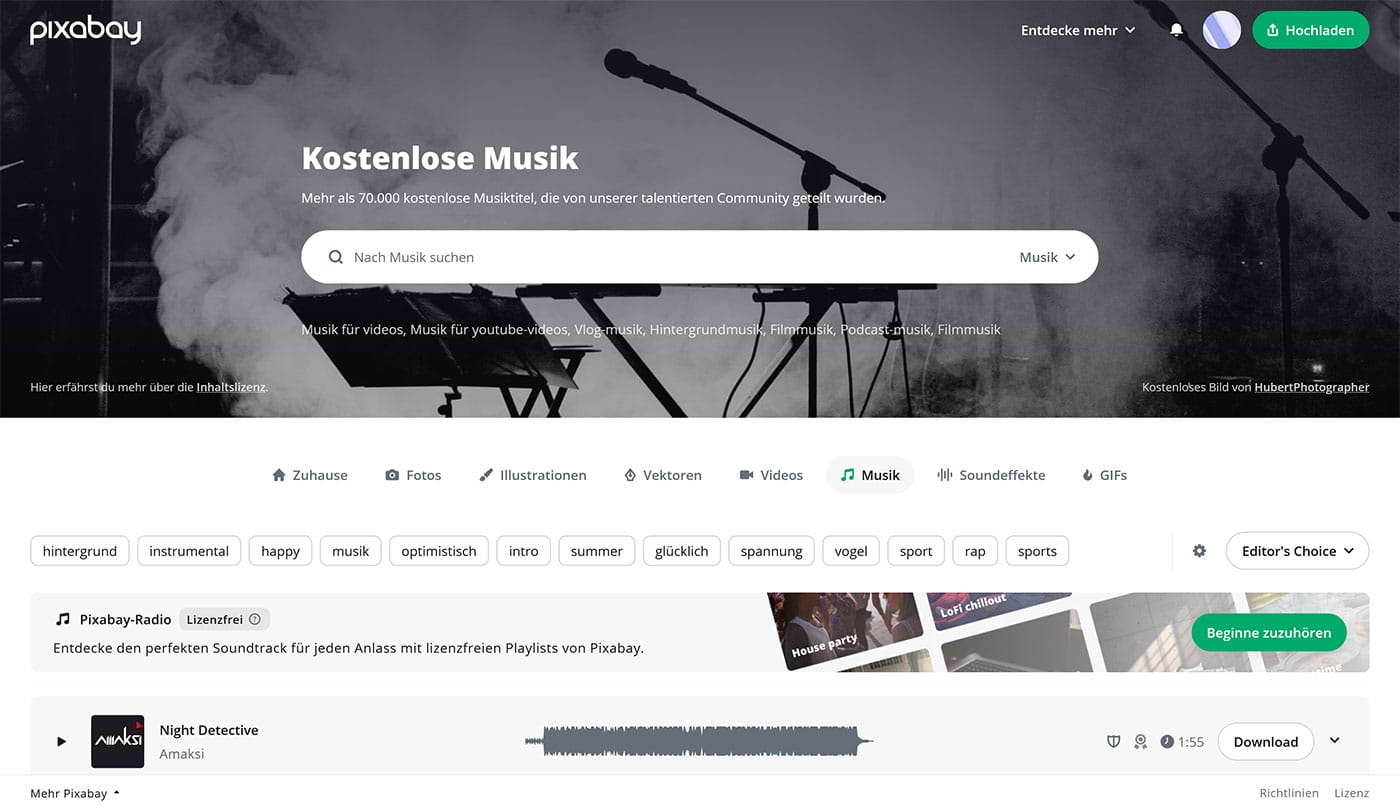
Free music using Pixabay as an example

Pixabay offers a variety of free music tracks and sound effects created by different artists.

Pro:

  • Created by real artists, therefore clear legal situation.
  • Over 90,000 free sound effects available.

Contra:

  • Long search times to find suitable music.
  • Different license conditions, not always suitable for commercial use.

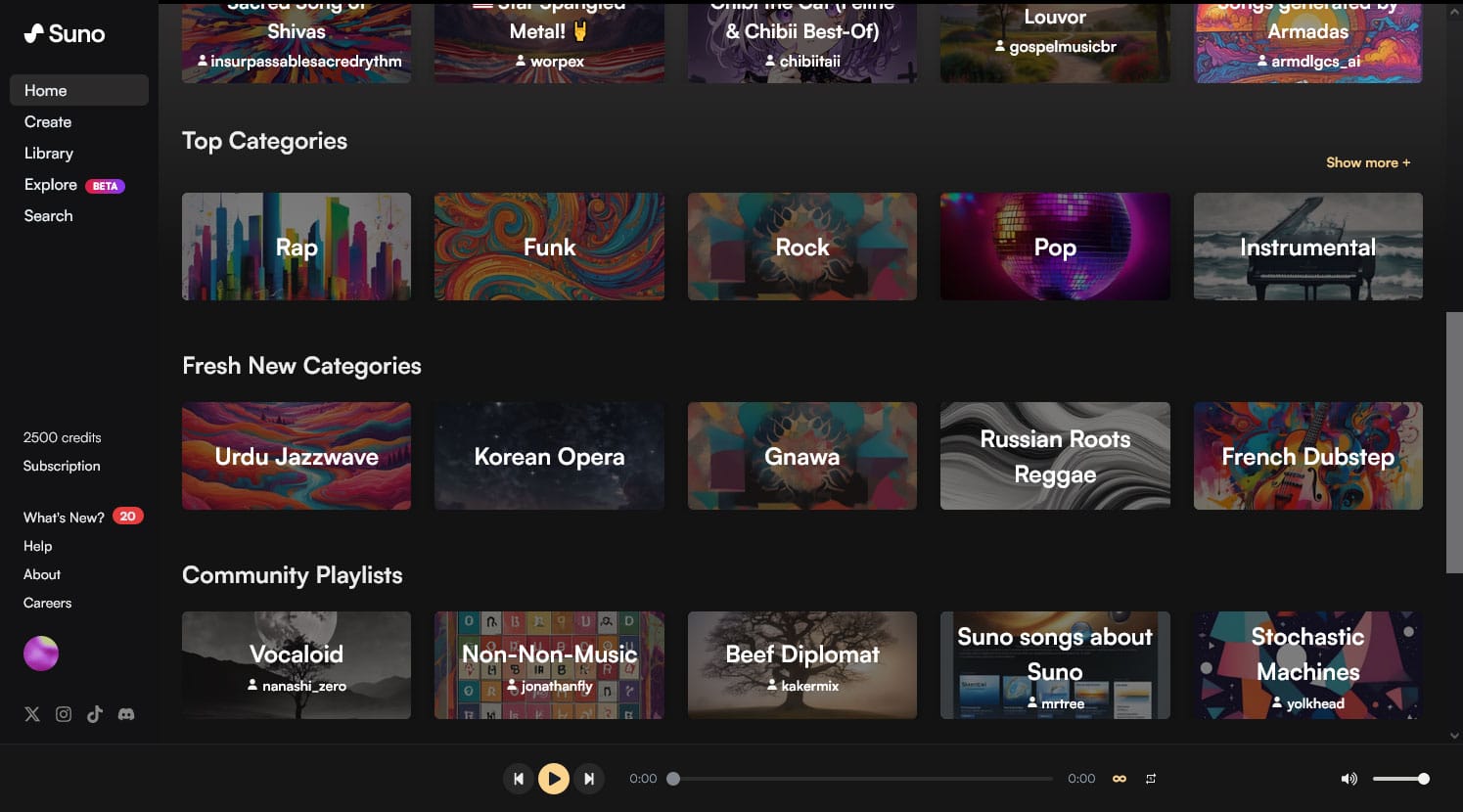
AI-generated music using the example of Suno

Suno is an innovative AI music generator that creates unique pieces of music in a matter of seconds.

Pro:

  • Quickly create unique pieces of music.
  • Possibility to customize genre, style, mood and instruments.
  • Flexible and customizable for different projects.

Contra:

  • Commercial use requires a paid subscription.
  • Requires practice and precise input for optimum results.
  • Unclear legal situation with AI-generated content, as this can change constantly.

How does the generation of songs by AI actually work?

Let’s go through the example using the Suno platform: First we create an account, then you can describe the song you have in mind in the song description (left in the picture), similar to all AI programs: the more precisely described, the better.
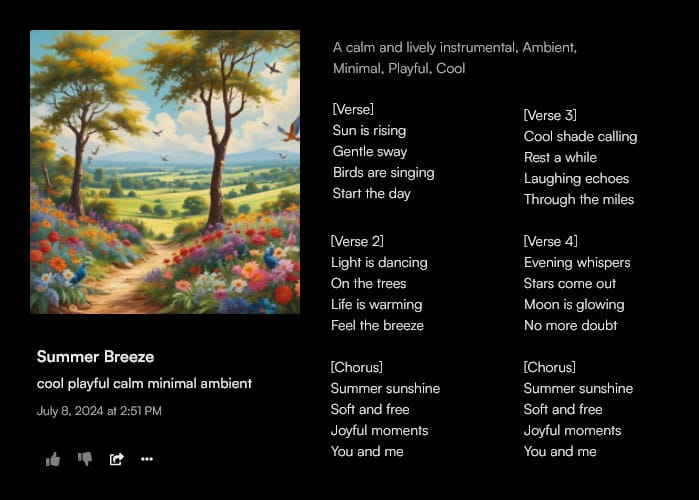
Then 2 variants of songs are created for the description entered. Both instrumentals and vocals with lyrics can be generated, which doesn’t sound too bad in our opinion, especially if you need a song as background music, the creations are very suitable.

Conclusion

Both options offer advantages and challenges.
Free music from platforms like Pixabay can be a good choice for projects with clear licensing requirements and no pressing timelines.
AI-generated music from providers such as Suno, on the other hand, offers high flexibility and fast results, but requires a better understanding of the technology and may require additional costs for commercial usage rights.
It is important to always check the terms of use and license requirements to ensure that the music can be used legally.
Especially in the AI sector, the legal requirements and terms of use change quite frequently at the moment, so special attention should be paid to this.
Regardless of whether you choose free or AI-generated music, always consider the aspects of visibility, brand development and the requirements of your own project.

Further aspects

  • Digitization helper: AI-generated music can change your digital routine more efficiently.
  • Innovative strength: utilize the possibilities of AI helpersto realize creative and innovative projects.
  • Helping people to help themselves: Both options offer support in the implementation of creative ideas, be it through broad music libraries or through the adaptability of AI tools.

For the best results in your project, you should decide for yourself and choose the most suitable music option carefully, but also keep all legal aspects in mind. Curious to find out more? Our contacts will be happy to help you: Katharina ZaunerKatharina Zauner +49 (0)911 / 47 49 49 53zauner@twobe.deLinkedIn

Sources