4 Min.We live in an exciting world where technology is shaping the way we communicate and AI-powered language models are playing an increasingly important role. According to a survey from 2023, 74% of German companies say they see potential in speech recognition technologies, while 70% rate the generative potential of AI for text, images or music as high. We at 2be are also actively using AI language models because we are convinced that they optimize our work processes and enable innovative solutions.
The challenges of international AI models for the German market
Whether ChatGPT, Claude or Gemini – models of this type differ, but have one crucial thing in common: they are mainly based on English-language data. This raises an important question, especially for us in Germany: Is this a problem? Under certain circumstances, this can lead to difficulties.
- When texts are generated by AI models that are not specially trained for German, there is a risk that the texts will sound generic and average rather than nuanced and idiomatic.
- Another aspect that should be taken into account is the different quality of the answers. The English answers are often more detailed and precise, while the German answers sometimes remain more vague or omit important details.
- Especially in specialist contexts or with newer terms, AI often reaches its limits. This can lead to newly introduced terms or specific specialist terminology not being correctly recognized or used.
The quality of an AI model depends largely on the training data. For languages such as German, which have less online data in global comparison, this is a natural handicap. 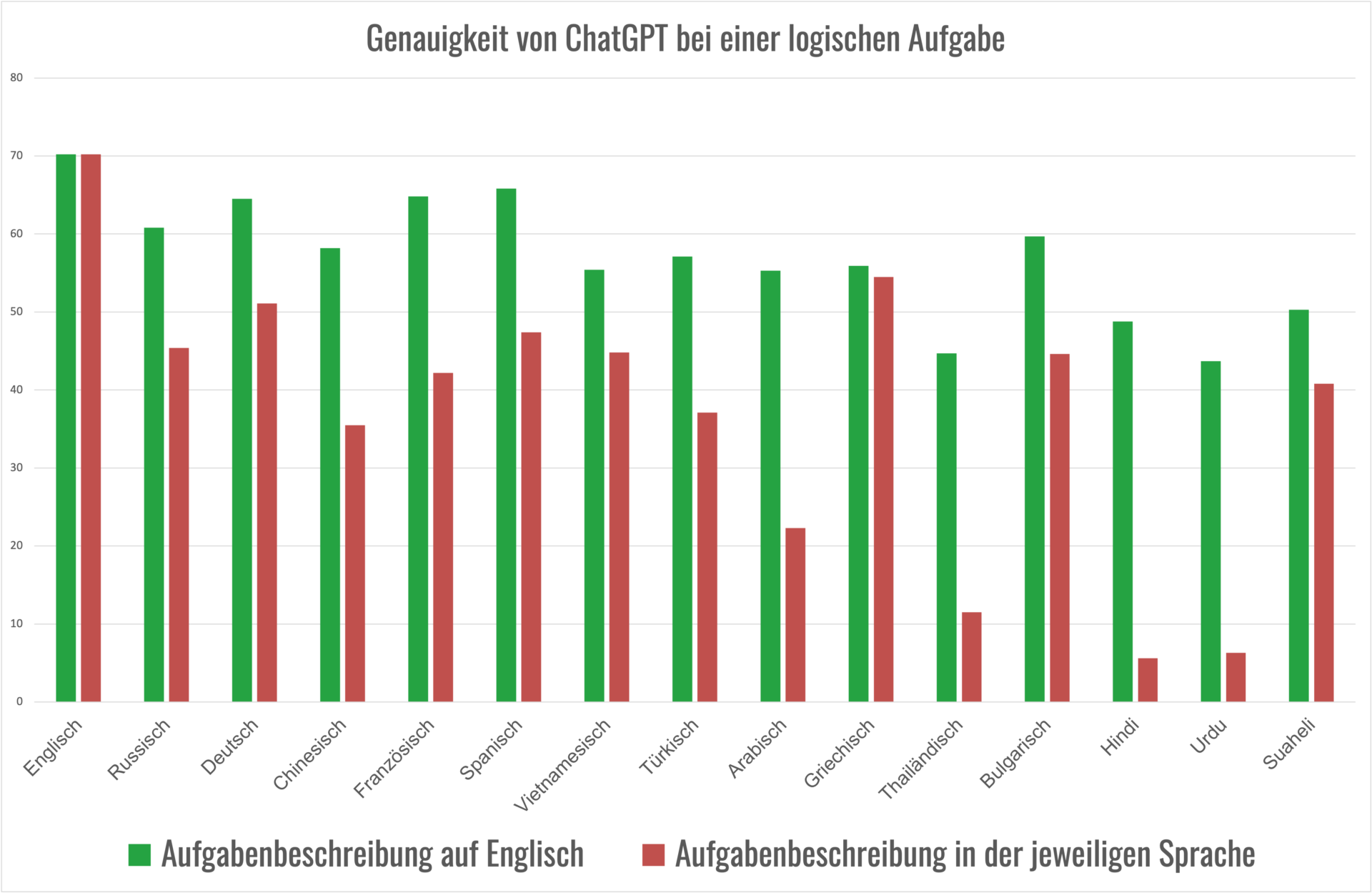
Local solutions for global technology?
However, there are already solutions to this problem: Research institutes are collecting more diverse and high-quality German texts in order to train AI models more comprehensively. The involvement of native speakers is also increasingly being considered, and work is also being done on isolated models that not only speak “generic German”, but also understand dialects or focus on specialist languages, for example.
Synthetic data: Between efficiency and challenges
This is where synthetic data comes into play. They offer the opportunity to effectively close the gaps in the training data. Our forecast: within the next few months, synthetic data sets will become one of the most important topics in the world of AI.
What is synthetic data?
Synthetic data is artificially generated information that mimics real data. It is used to train AI models when real data is difficult to obtain or there are data protection concerns. Synthetic data is a double-edged sword: The use of synthetic data offers you a number of advantages. One advantage is the protection of privacy, as no real user data is used. They also allow you to simulate a wide range of scenarios, for example from rare dialects to specific expressions. They are also available in large quantities, making them a cost-effective solution. However, generating high-quality, realistic data is technically challenging. Poor quality data can lead to erroneous or biased AI models, which has a detrimental effect on results. Another risk is overgeneralization, which could miss real linguistic nuances and complexities. However, if used carefully, they have the potential to significantly improve the technology. 
The Masakhane project and its global significance
One example of how community and new data sets can be used to improve language models is the Masakhane project. This project aims to develop machine translation models specifically for African languages. Masakhane focuses on capturing the diversity and nuances of local dialects and languages such as Yoruba, Swahili or Amharic. To do this, the project works closely with communities to collect real and diverse language data. These examples show that through collaboration and the use of advanced data collection methods, cultural inclusion and technological innovation can go hand in hand.
Ready for the future of AI?
The development of AI models that fully support the German language is a crucial step for digital transformation in Germany.
Want to find out how your business can benefit from these advances?
Contact us at 2be to find out more about our AI-based solutions. Curious to find out more? Our contacts will be happy to help you:  Katharina Zauner +49 (0)911 / 47 49 49 53zauner@twobe.deLinkedIn