Posts

We don’t have a content problem. We have a harmony problem.

6 Min.

It’s never been easier to produce content. A few bullet points, a good prompt, and a few seconds later, your first LinkedIn post is ready. The newsletter follows right after, the same content is turned into a blog post, and, of course, the accompanying image can also be generated using AI. Convenient? Absolutely.

Here at 2be, we use AI ourselves every day and wouldn’t want to do without many of these capabilities. It helps us with research, structuring, drafting, visualizing, and thinking things through. But the easier content production becomes, the more apparent the flip side of this development becomes: We’re producing more and more—and much of it looks and sounds increasingly the same.

When Everyone Suddenly Becomes a Content Creator

Generative AI has dramatically lowered the barrier to entry for effective communication. Today, it no longer necessarily takes several hours to produce a first draft of usable text. Even a professional-looking image requires neither a photo shoot nor years of experience with Photoshop. This opens up enormous opportunities for companies, and small and medium-sized businesses in particular can now publish content regularly, test ideas more quickly, and showcase their existing expertise with significantly less effort.

The problem, however, arises when AI is no longer used merely as a tool but as a source of ideas for everything.

“Write me a LinkedIn post about digital transformation.”
“Create a modern image on the topic of innovation.”
“List five benefits of AI for small and medium-sized businesses.”

The result is often perfectly fine. And that’s exactly the problem. Because thousands of other people can ask the same questions and receive answers structured in a similar way. This AI uniformity is now not only readable but also visible: Anyone who regularly scrolls through LinkedIn, Instagram, or company blogs will have noticed certain patterns by now.

For written texts, these include the familiar opening lines, short paragraphs, lists of three points, five key takeaways, rhetorical questions, and major insights at the end.

But this same effect is increasingly evident in images and graphics as well. Certain illustration styles keep cropping up. People are depicted standing in front of glowing interfaces. Brains are combined with digital networks. Light bulbs symbolize innovation. Rockets represent growth. Added to this are similar icons, color gradients, lighting effects, and design elements.

Of course, there’s nothing wrong with that at first. But if ten companies use the same visual elements, everything eventually starts to look the same; nothing stands out anymore. Sure, all the facts are there, but the wit and individuality are lost.

What begins as linguistic consistency in text can quickly extend to the entire brand identity, and that’s when a practical AI tool turns into a brand problem.

Perfectly designed, yet forgotten

Generative AI is excellent at creating new content based on existing patterns. That’s exactly why it quickly produces results that look and read like professional work.

But professional doesn’t automatically mean distinctive; a perfectly crafted post can still be forgotten after just a few seconds. A technically impressive AI-generated image can still look just like a hundred other images in the feed, and a well-designed campaign can still fail to establish any connection to your brand.

The key question, therefore, is no longer simply, “Can we create this content using AI?” but rather,“Why should this content clearly come from us?”

A brand needs more than just a good tagline

This statement is becoming increasingly important for brand communication, because a brand isn’t created simply by making every single element look perfect. It is created through recognizability, personality, and consistency.

  • How do we speak?
  • What issues are we focusing on?
  • What is our position?
  • What stories can only we tell?
  • What do our pictures look like?
  • What colors, shapes, perspectives, and design elements define us?
  • And most importantly: What are we consciously doing differently?

This is exactly where the simple standard prompt reaches its limits. If you simply ask AI to design something “modern,” “professional,” “innovative,” or “high-quality,” you’ll often get exactly what those terms mean on average. But for a strong brand, average just isn’t enough.

The most compelling content is usually already within the company, and to create good content, you often don’t even need to constantly come up with new topics—the most interesting stories are often right in front of you. A customer meeting that went completely differently than expected. A project where the original plan didn’t work out. A discussion within the team. A decision that no one wanted to make at first. A development in your own industry that you disagree with. Or a solution that may seem unspectacular from a technical standpoint but solves a real problem for the customer.

This is the kind of content that AI shouldn’t just come up with on its own, because it stems from experience—and it is precisely this experience that sets companies apart.

AI should enhance personality—not replace it; for us, this is one of the most exciting challenges in using AI in marketing and communication.

A CEO can record his thoughts on an industry trend, and AI helps turn them into a structured article. A sales representative contributes insights from customer conversations, and AI assists with the wording. A marketing team can use AI to develop different versions of an idea without having to start from scratch every time.

AI can also be extremely useful when it comes to images—as long as it’s combined with a clear visual language, a well-defined corporate design, and a unique creative concept.

In that case, the prompt isn’t “Create an innovative image on the topic of digitalization,” but rather the idea, perspective, and design come from us first, and then AI helps us bring them to life. That’s a crucial difference.

From “What should we post?” to “What do we have to say?”

Perhaps that’s why we also need to change our editorial planning. Instead of asking every week, “What could we post?” companies could ask more often, “What have we experienced, learned, or observed that might be interesting to others?” or “What do we have an opinion on?”

Suddenly, the role of AI is changing: It no longer has to come up with the topic, the message, the text, and the image; instead, it becomes a sparring partner. It helps us make better use of existing knowledge, further develop ideas, and implement content more efficiently.

People bring experience, attitude, and personality to the table. AI helps turn those into communication.

Less AI one-size-fits-all, more brand

The better AI systems become, the harder it will likely be to stand out based solely on technically flawless content. Flawless text will become the norm. Good images will become the norm. Professional videos will become easier to produce.

And that’s exactly why other things become more valuable: ideas. Attitude. Experience. Humor. Personality. Quirks. In short: everything that makes a brand unique.

For companies, this doesn’t mean doing without AI. Quite the contrary: those who use these new tools wisely can communicate faster and more efficiently than ever before—but ultimately, AI shouldn’t be the one determining how a brand sounds and looks.

We don’t have a content problem. We increasingly have a problem with homogeneity, and so the solution can’t simply be to produce even more content. The better question is: What can we tell, show, or say that couldn’t just as easily come from any other company?

So in the future, we should ask AI less often, “What should I post?” and tell it more often, “This is our idea. This is our experience. This is our perspective. Help us turn this into something good.”

After all, AI can produce content. But we still have to turn that content into a distinctive brand ourselves.

Curious now?
Our contact persons will be happy to help:

Matthias Brinkmann
+49 911 47494949
brinkmann@twobe.de
LinkedIn

Canva or InDesign? The Follow-Up Report

4 Min.

Is Adobe InDesign even necessary anymore, or is Canva sufficient for professional design projects? Our workshop “Adobe Meets Canva—Which License Do I Still Need?.” The answer—unsurprisingly—turned out to be more nuanced than many had expected.

What was planned as a traditional technical presentation quickly evolved into an open exchange of experiences among professional designers, marketing managers, Canva users, and accessibility experts. It was precisely this mix that made the afternoon particularly exciting: different perspectives came together, experiences were shared, and many existing assumptions were challenged.

Affinity delivers the biggest surprise

One of the highlights of the workshop was the integration of Affinity into Canva. Many participants were unaware that Canva had acquired the entire Affinity suite and that it can now be used at no additional cost as part of a Canva subscription.

This suddenly gives users access to a professional tool for vector graphics, image editing, and layout that significantly expands the previous limits of Canva. For many participants, this was the most surprising insight of the entire workshop.

Canva Excels in Collaboration and Speed

There was a particularly intense discussion about the possibilities for cooperation.

Using real-world client projects as examples, we demonstrated how multiple people—designers, copywriters, photographers, marketing professionals, and even clients—can work on a document at the same time. This approach offers enormous time savings, particularly when working on parish newsletters, annual reports, or newsletters.

The case studies clearly showed:

  • Several people are working on the same document at the same time
  • significantly shorter decision-making processes
  • fewer rounds of revisions
  • greater sense of ownership among all project participants
  • On-time print submissions

At the same time, it became clear that collaboration only works with clearly defined roles and a final quality control check.

Want to dive even deeper? Then mark September 8, 2026, on your calendar now.

In “Adobe Meets Canva – Part 2,” we’ll show you how both programs work together seamlessly in everyday business—from professional workflows and AI support to corporate design and efficient teamwork. Click here to register: Adobe Meets Canva – Part 2

Typography remains Adobe InDesign’s forte

While Canva excels in terms of speed, Adobe InDesign remains the gold standard for sophisticated typography. Professional typesetting projects requiring precise spacing, clean justified text, automatic hyphenation, or complex typographic rules can still only be reliably executed using InDesign.

The participants therefore quickly agreed: Anyone who regularly designs magazines, books, or high-quality printed materials will continue to find InDesign indispensable. Another focus of the workshop was comparing traditional layout functions.

Among other things, the following topics were discussed:

  • Sample Pages
  • automatic page numbers
  • Text concatenations
  • Double-page spreads
  • Tables of Contents
  • Automated layout processes

Although there are now numerous workarounds available within Canva—such as templates, brand kits, or AI-powered PDF imports—Canva still does not match the full range of features offered by Adobe InDesign.

Print quality is impressive in Canva, too

Another commonly discussed misconception has also been debunked: Canva now generates print-ready PDFs that include bleed margins and CMYK output. While not all color profiles are available, practical experience over the past few years has shown that Canva can produce very good print results—especially in digital printing.

Nevertheless, the panel’s recommendation was clear: Before undertaking complex print projects, color management should always be coordinated with the respective printing company.

During the discussion, one topic almost naturally emerged as the focus of a potential follow-up event: accessibility. Several experts in this field discussed the possibilities and limitations of both programs.

While Canva already offers basic features such as alternative text and decorative labels, both Canva and Adobe still have significant room for improvement when it comes to creating fully accessible PDF or HTML documents. This is precisely where many participants would like to see an in-depth workshop with concrete, practical examples.

Canva or Adobe? The answer is: It depends.

The most important insight gained that afternoon was that there is no clear winner.

Canva excels in any situation where speed, collaboration, ease of use, and cost-effective workflows are required. Adobe InDesign, on the other hand, remains the top choice when the highest standards are required for typography, complex layouts, or automated print production. Today, these two tools complement each other far more than many people might initially assume.

We would like to extend our sincere thanks to all participants for the engaging discussions, the numerous real-world examples, and the open exchange of experiences.

The strong response shows us that this topic is currently on the minds of many companies. That is why we are continuing the series. There was particularly high demand for in-depth workshops on accessibility, Affinity, and AI-powered design workflows.

We’re already looking forward to the next event and continuing our dialogue with you.

Curious now?
Our contact persons will be happy to help:

Matthias Brinkmann
+49 911 47494949
brinkmann@twobe.de
LinkedIn

NeoBird on the realignment and the launch of its own sales campaign

4 Min.

With a clear strategic reorientation NeoBird enters the next phase: In this interview we talk to Christian Dickert about the reason for and objectives of the new sales campaign, the path to a uniform brand identity and why every interaction is now part of sales.

2be:
What prompted you to launch your own sales campaign for NeoBird Digital – and what were the main objectives?

Christian Dickert:
The impetus came from a phase of upheaval. After the death of the previous managing director and the transition to family management, NeoBird was “frozen” to a certain extent – the business model was stable, but without a clear direction for growth. We realized that we needed new impetus in order to position the company for the future.
Another important point was the realization that our gamification area is difficult to grasp externally. Projects often seem too abstract and budgets are usually tied up in one-off campaigns. We therefore decided to structure NeoBird more clearly in future: into NeoBird Games and NeoBird Digital. While Games acts as a creative reference brand on platforms such as Steam, NeoBird Digital focuses on customized digital services and high-quality software development.

2be:
In the workshop on the brand essence, you worked intensively on your positioning. What defines NeoBird as a brand today?

Christian Dickert:
NeoBird today stands for clarity, quality and partnership-based collaboration. Our aim was to create a stringent brand image from the diversity of our projects. This includes a consistent design that is managed on a central web platform – including the logo, color and font concept. This allows us to ensure that all materials – from social media and presentations to business cards – speak the same language. We want our brand to create recognition at first glance and at the same time convey trust.

2be:
How has your understanding of brand and sales changed as a result of this process?

Christian Dickert:
We have learned that brand and sales are inextricably linked. We used to think more in terms of projects – today we see every interaction, whether internal or with customers, as part of sales. Every contact is an opportunity to bring the brand to life. This awareness has changed the way we work together as a team: Cross-disciplinary, more open and with a clear view of the added value for our customers.

2be:
You have developed new materials and templates – from PowerPoint to logos. What role does a consistent design play in this?

Christian Dickert:
A very central one. The uniform design is not just an aesthetic decision, but a strategic tool. It ensures that all means of communication are coordinated and tell the same story. This creates trust and professionalism – both internally and externally. We have created a central system that bundles all design elements and makes them available at any time.

2be:
How do you use digital channels such as LinkedIn or your website to make the campaign visible?

Christian Dickert:
LinkedIn is currently our most important channel. We are building targeted campaigns there that work with clear call-to-actions to convert interested parties into leads. Our new website also plays a key role: it serves as a central hub where all content converges. Regionally, we are focusing on the DACH region to ensure cultural and linguistic proximity to our target groups.

2be:
What was your biggest learning or “aha” moment during the collaboration?

Christian Dickert:
Our biggest learning was that sales is not the job of individuals. When everyone in the team understands that they are part of the sales process, the whole attitude changes. We also experienced how valuable it is to take time for your own brand – not just between projects, but as an integral part of the company’s development.

2be:
And finally: What happens now – what next steps are you planning to expand or deepen the campaign?

Christian Dickert:
Specifically, we are currently working on completing our new website. At the same time, we are planning regular social media activities to create continuous visibility. We also want to intensify our networking in regional networks and be present at relevant events. The aim is to establish NeoBird Digital as a permanent fixture in the digital services market in the long term.

Conclusion:

With the clear division into NeoBird Games and NeoBird Digital, a consistent brand presence and a rethought sales strategy, the company is repositioning itself – confident, focused and future-oriented.

Curious now?
Our contact persons will be happy to help:

Matthias Brinkmann
+49 911 47494949
brinkmann@twobe.de
LinkedIn
When a logo says more than 1000 words

3 Min.

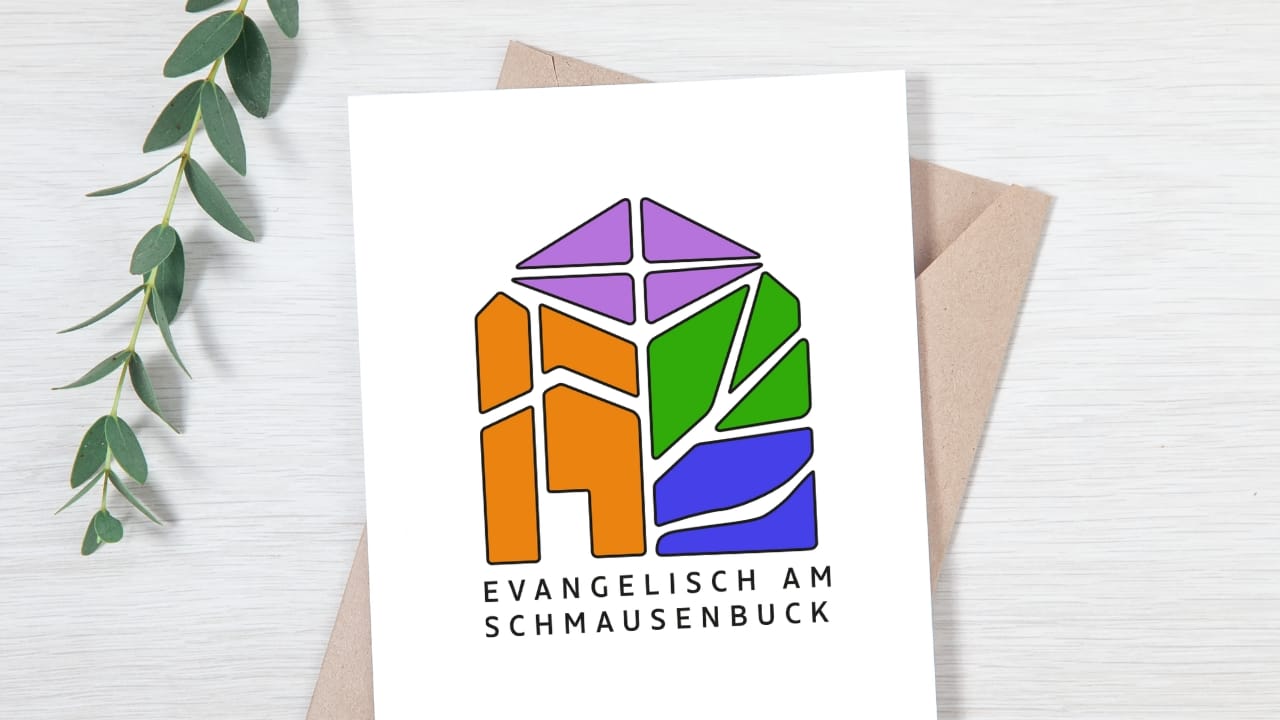
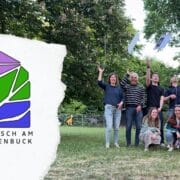
The parish “Evangelisch am Schmausenbuck” has a new logo – and it is much more than just a pretty picture. It is the visual result of a creative process that makes the identity, values and future vision of a congregation visible. Together with a great student creative team – Hanna, Linda and Joana – we at 2be were able to develop this visual identity. The result is more than just a logo: a strong symbol of community, change and faith.

For us as brand makers, a good logo is not just design. It translates values, generates recognition and creates trust – at first glance.

This is a special task, especially for a church congregation: How do you make faith visible? How do you show openness, solidarity and modernity in a clear, simple form? These are precisely the questions we explored together with the team.

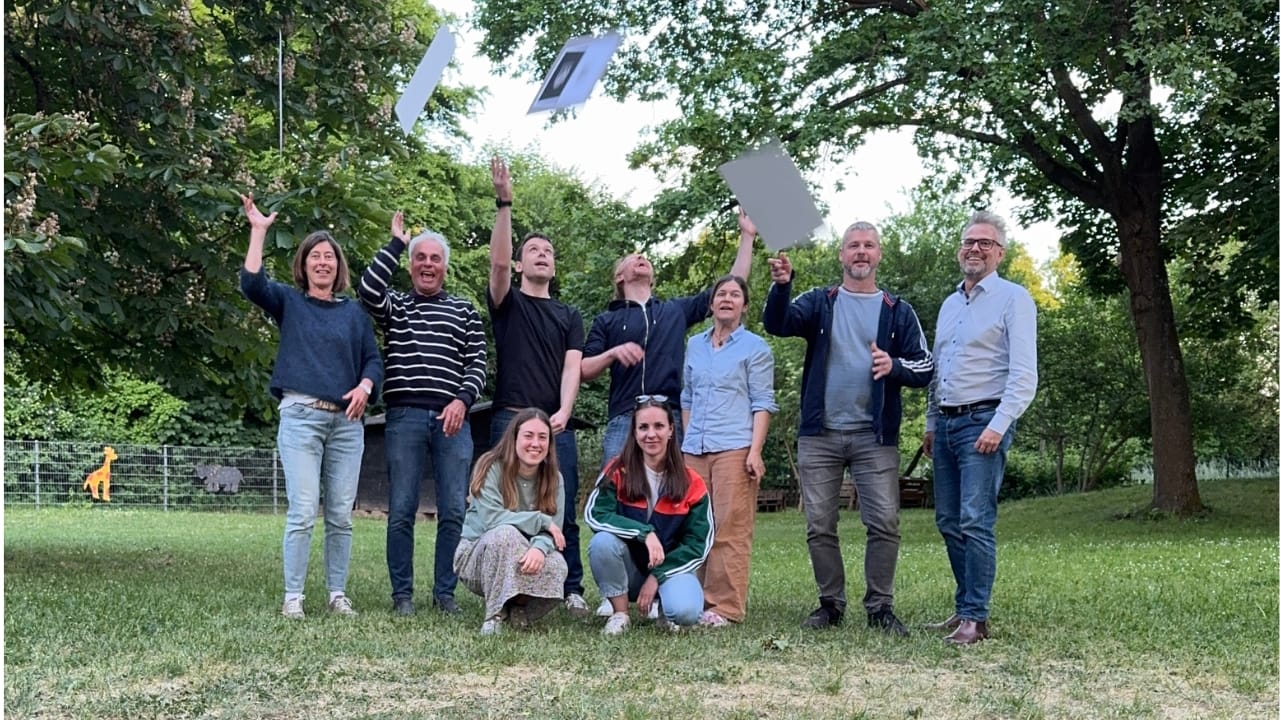
Joint success: the creative project group for the new municipal logo

Co-creation instead of briefing

It was clear from the outset that this project thrives on genuine collaboration. That’s why we deliberately kept the process open. The student team – Hanna, Linda and Joana – developed ideas, took feedback on board and created a logo in several stages that everyone could support. We are particularly proud of how much professionalism and creative clarity the three of them brought to the table. Joana had already completed her media design studies at the time, while Linda and Hanna were still studying. Together they complemented each other perfectly.

A strong logo speaks immediately – even before any text or explanation follows. It conveys values, emotions and the character of a brand or organization. The clear, geometric shape of the “Evangelisch am Schmausenbuck” logo stands for structure and modernity. The choice of color shows: This is where new beginnings and tradition meet.

One of the most exciting questions in the design process was the choice of color. Why purple? Because it has tradition as a “church color” and at the same time radiates emotional depth. In combination with bold color accents, the result is a color scheme that embodies freshness, openness and change – in keeping with the spirit of the church.

Logo

Rethinking the church – also in design

What does “church” mean for young people today? For Hanna, it is a place of community and reflection – but also a space for innovation. The new logo was intended to express precisely this connection between past and future. A successful example of how design becomes a dialog between tradition and zeitgeist.

Conclusion: A logo that is more than just beautiful

The new logo of “Evangelisch am Schmausenbuck” shows how visual identity strengthens modern communication – also (and especially) in the church sector. We at 2be markenmacher are proud to have accompanied this creative process – from the initial idea to the finished symbol.

Curious now?
Our contact persons will be happy to help:

Matthias Brinkmann
+49 911 47494949
brinkmann@twobe.de
LinkedIn
Corporate Design Manual: Regular updates necessary!

3 Min.

A brand needs leadership. Not just in the traditional sense from the perspective of sales, research or corporate culture. A strong hand is also needed for the visual and content-related examination of the company’s communication as a whole. Here, the guiding principles of uniformity, understanding of values and brand message are paramount. This is because it provides clear rules for the often self-interpretative approaches of sometimes more, sometimes less motivated employees. What better medium for this than the Corporate Identity Guide with its focus on corporate design, corporate behavior and corporate communication.

2be brings the experience and delivers results

Thanks to our many years of experience in the field of corporate communications, we are able to serve companies of every class and industry ( Elma, EDAG, OECHSLER, CERTA Systems, HumanOptics or Holding AG – to name just a few). Whether a “light” 8-page document or a 100-page manifesto – we know both: the advantages and the areas of application. And what is even more important: we know where we can relieve customers of a great deal of work when creating such projects.

Companies or institutions that do not treat their “corporate design (corporate communication) manuals” as “living organisms” will be left behind in their individual brand development with only a short delay.

The reason is simple

New developments in the field of marketing tools, but also current content trends, are not taken into account in this way, and the associated questions remain unanswered. In worse cases, it will also happen that new applications added to the marketing canon are not accepted internally because there is no corresponding solution.

In order to design the brand setting in such a way that it also fits in with this ongoing development, the decisive CD manual with its binding guidelines should always be available in digital form; in this way, it can be constantly updated or modified if necessary. The internal cloud forms an optimal “database” for the templates and content to be used. This means that the necessary files can be downloaded via a link and do not have to be sent in a time-consuming process.

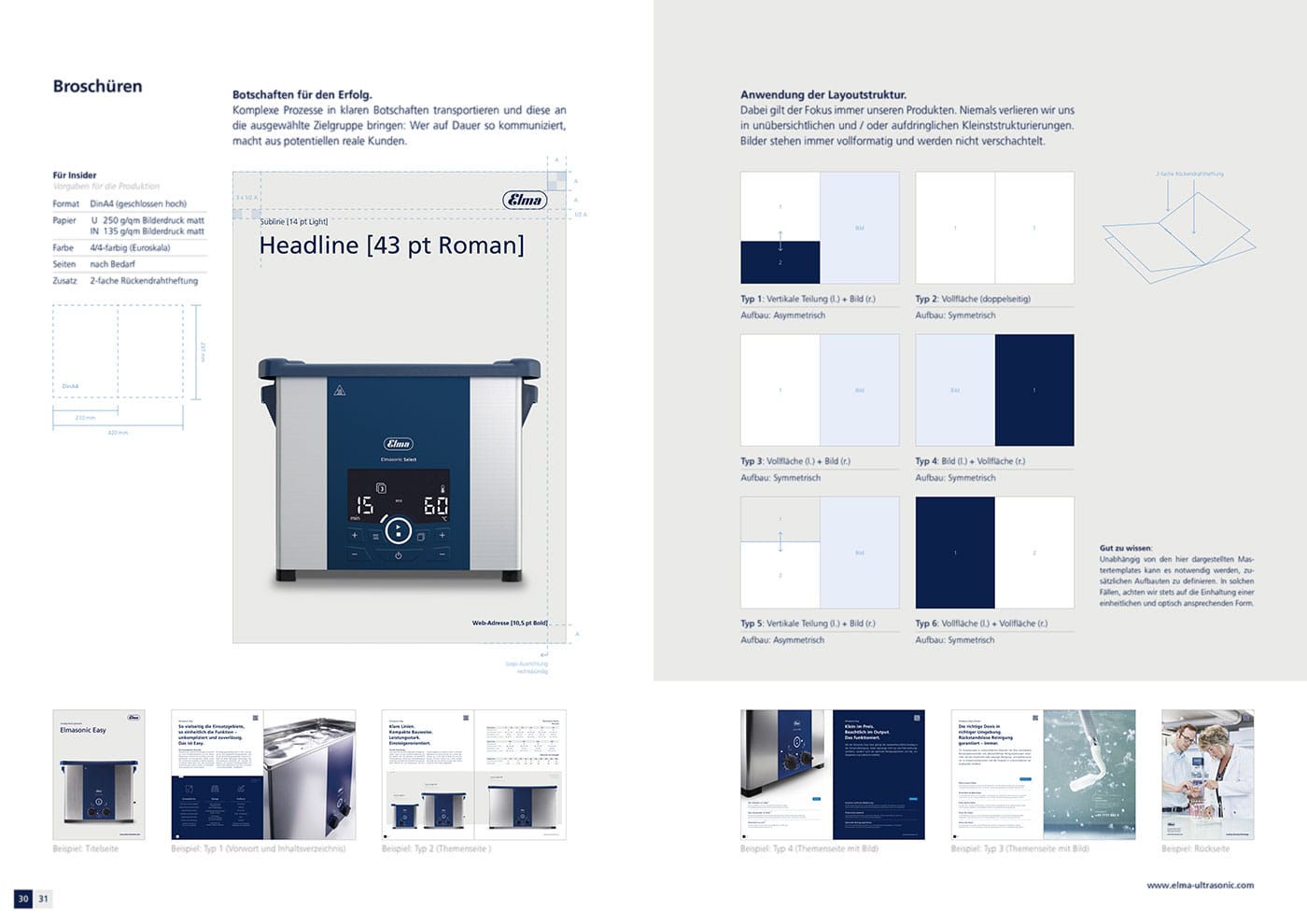
Excerpt from the Elma corporate design

Excerpt from the Elma corporate design

In order to be able to record and incorporate ongoing updates: Brand workshops held every six months or every six months provide an ideal basis for this. On these occasions, it is important that all key stakeholders come together so that all essential new information can be evaluated and appropriate decisions made!

Some of our references on this topic:
Elma
WBG Nuremberg
Oechsler AG
CERTA Systems
HumanOptics Holding AG

Curious now?
Our contact persons will be pleased to help you:

Matthias Brinkmann
+49 (0)911 / 47 49 49 51
brinkmann@twobe.de
LinkedIn